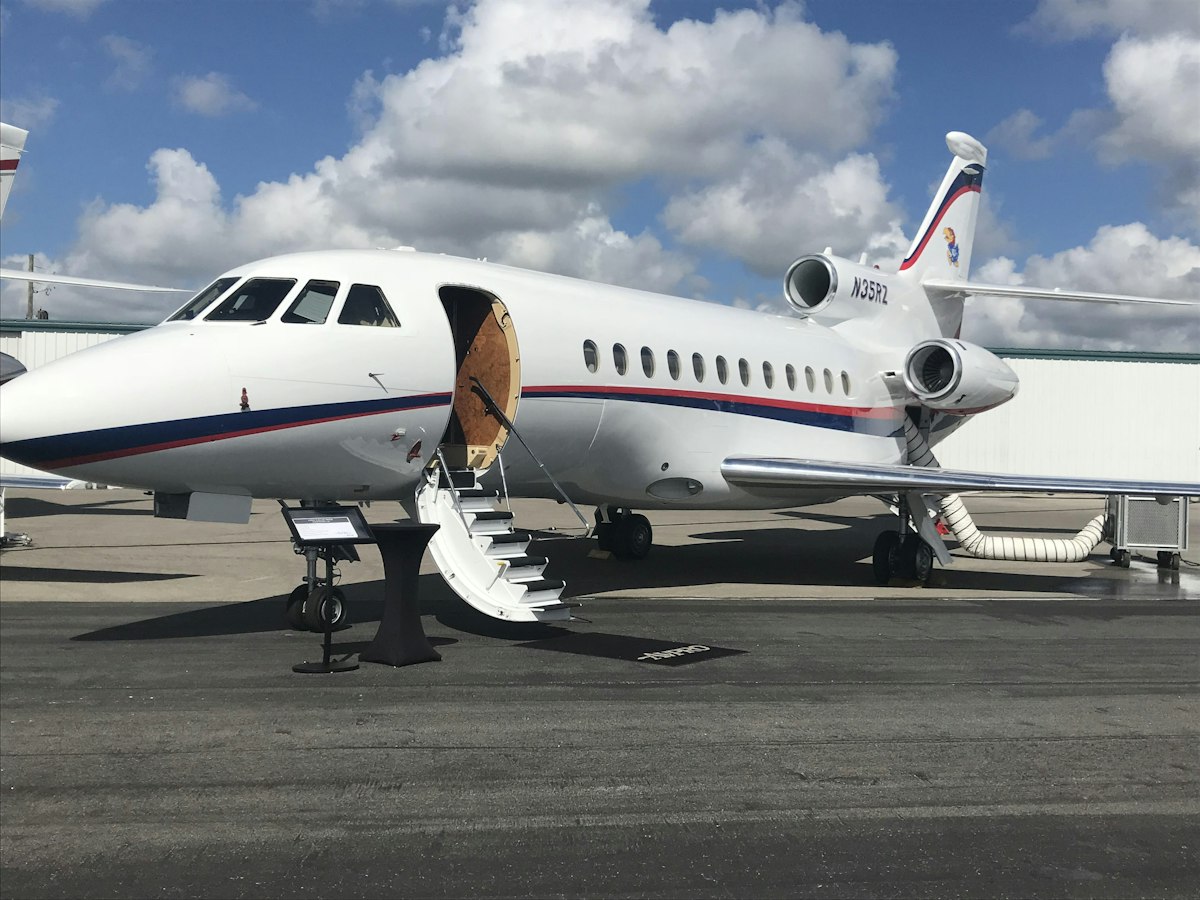
AOG — Aircraft on Ground — is one of the most consequential abbreviations in commercial aviation. When an aircraft is grounded for a technical fault, every hour it remains out of service costs the operating airline in lost revenue, crew disruption, passenger rebooking, and reputational damage.
According to Boeing, an AOG situation can cost between $10,000 and $20,000 per hour at the lower end, and up to $150,000 per hour for a wide-body aircraft on a high-frequency long-haul route. An FAA study found that AOG-related flight delays cost the US aviation industry $31 billion in a single year. Industry analysis from Air Cargo Week found that a single engine-related AOG event — including repair, logistics, revenue loss, and passenger compensation — can total over $600,000 when the aircraft is grounded for three days.
How OBC solves the AOG problem
The part required to fix the fault is often small: an avionics component, a hydraulic seal, a flight deck instrument. The part is frequently available — at a warehouse in Frankfurt, a supplier in Miami, a maintenance facility in Singapore. The challenge is getting it from there to a hangar on the other side of the world within hours, not days.
A courier is dispatched to collect the part, clears fast-track security, boards the next available commercial flight with the component as carry-on or checked baggage, and delivers it directly to the maintenance team on arrival. The entire process — from order confirmation to part in hand — is measured in hours. Time:matters documented a case in which a spare part travelled from southern Germany to a manufacturing plant near Melbourne, Australia, in 26 hours via OBC service.
"The global AOG logistics market was valued at $2.99 billion in 2024 and is forecast to reach $4.16 billion by 2032, driven by growing fleet sizes and the increasing cost of downtime." — IntelMarketResearch, 2025

Beyond aviation: the same logic in other industries
The automotive sector runs on just-in-time manufacturing. A production line building 1,000 vehicles per day carries minimal buffer stock of critical components. When a production tool fails, when a prototype component is needed across facilities for testing, or when a sensor is required before a production run can proceed — the line stops. Industry estimates put the cost of a stopped automotive assembly line at €15,000–50,000 per hour, making the economics of an OBC dispatch very different from how they appear in isolation.
The semiconductor industry faces structurally identical dynamics. The 2026 Iran conflict illustrated this directly: European chip buyers found themselves with delivery delays of several days as air freight capacity fell around 9% on Middle East-transiting routes. The companies that maintained supply continuity were those with OBC capability available for their most critical component movements.
The pricing gap
The case for OBC in AOG situations is so well established that it forms a dedicated market segment. What the market has lacked is a way to procure that capability quickly, transparently, and at a competitive price. The traditional model — a phone call to an agency, a quoted rate with no competitive pressure — has persisted largely unchanged for decades. That is the gap a transparent OBC marketplace is designed to close.
- Boeing / Wikipedia — Aircraft on Ground cost estimates per hour
- FAA — AOG flight delay cost study, US aviation industry
- Air Cargo Week — "The real cost of AOG", October 2025
- IntelMarketResearch — "Aircraft on Ground Logistics Market Outlook 2025–2032"
- Time:matters — AOG OBC case study, Melbourne, Australia
- CNBC — "Chip buyers in Europe paying more as Iran war hits air freight", March 2026
- K&L Freight — "AOG Logistics: How We Move Aircraft Parts Fast"
Stay ahead of the next disruption.
Join 400+ logistics managers and couriers already on the OBCquote early access list.